The Final Countdown: How I Rebuilt the Most Famous Synth Fanfare in Rock
You know it from the first bar. Stadiums, wedding DJs, every sports arena on the planet. But ask most people what that sound actually is and you get a shrug: "a synth… probably a DX7?"
The real answer is more interesting. So I did what I do: I rebuilt the whole track from scratch, every part, then mixed it to get as close to the record as I possibly could. Here's what I learned.
It started on a borrowed Polysix
In 1981 or 1982, a young Joey Tempest borrowed a Korg Polysix from his friend Mic Michaeli. Mic wasn't even in Europe yet. Messing around on it, Joey found the riff. He knew it had something, but he couldn't build a song around it, so it sat in a drawer for years.
In 1985, bassist John Levén told him to finally do something with it. The band wanted a big opener for their live show. Joey wrote lyrics about leaving Earth, inspired by one of the first singles he ever bought: Bowie's "Space Oddity".
The secret: two synths stacked
By the time Europe went into Powerplay Studios in Zürich (September 1985 to March 1986), Mic was in the band, and he's explained the sound himself:
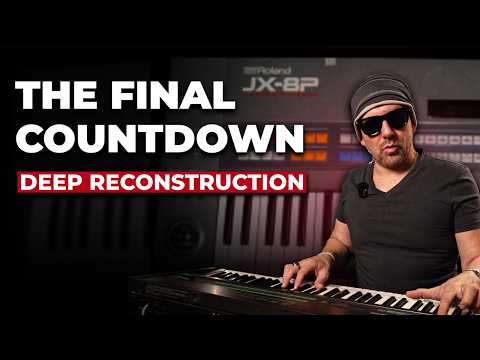
"I made a brassy sound from the JX-8P and used a factory sound from the Yamaha, and just layered them together."
So the fanfare has two layers:
- Yamaha TX-816. Basically eight DX7s in a rack. This is the FM layer: the bright, punchy bite at the front of every note.
- Roland JX-8P. Analogue, with two DCOs. This is the body, the warmth and weight underneath. It reportedly started life as the factory "Stab Brass" patch, which Mic then edited.
Neither one on its own is that sound. Together, they are. And here's the kicker: on stage, Mic doesn't try to rebuild it at all. He sampled the original stack and plays that.
How I rebuilt it
The fanfare, part 1: the JX-8P
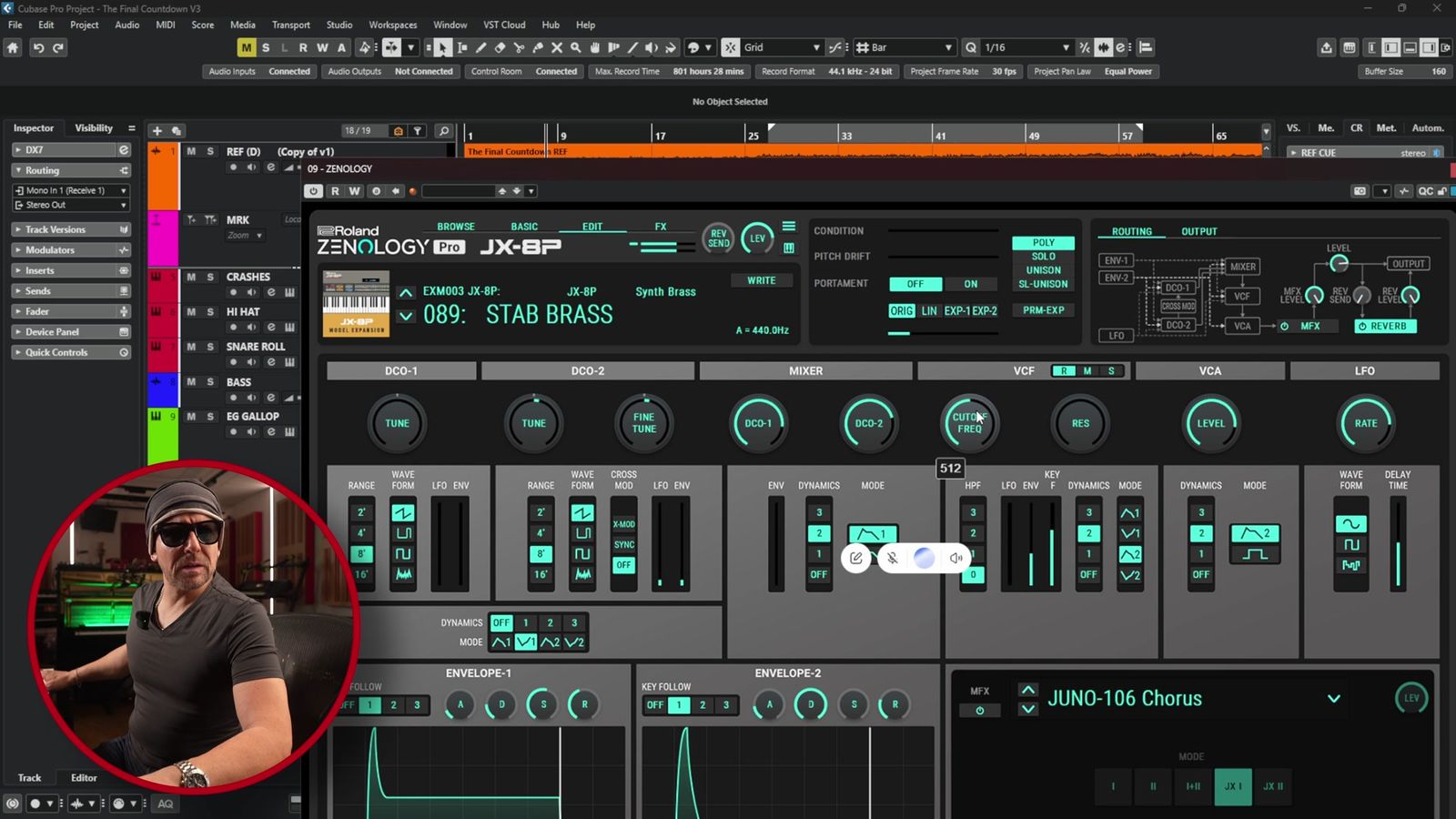
I don't have a real JX-8P, but I do have Roland's JX-8P model running inside ZENOLOGY Pro, and there it is: Stab Brass (patch 089 in ZENOLOGY; it was program 28 on the original JX-8P). I played it next to the original and… it's not quite that, is it?
So I started tweaking:
- Filter frequency opened up. Straight away I could hear the pitch trying to settle into place, which is very much the character of the record.
- A shorter release. It was hanging on too long.
- The pitch envelope. This is where the little "wah" at the start of each note lives.
- Poly instead of unison. Poly sounded less nasal.
- Velocity pinned at maximum. The patch only sounds right when you hit it as hard as you possibly can, which makes it pretty unplayable. A MIDI modifier with velocity set all the way up fixed that.
Interestingly, the fan lore says Mic switched the JX-8P's dynamics off. Needing full velocity every time fits that story perfectly.
The fanfare, part 2: the DX7
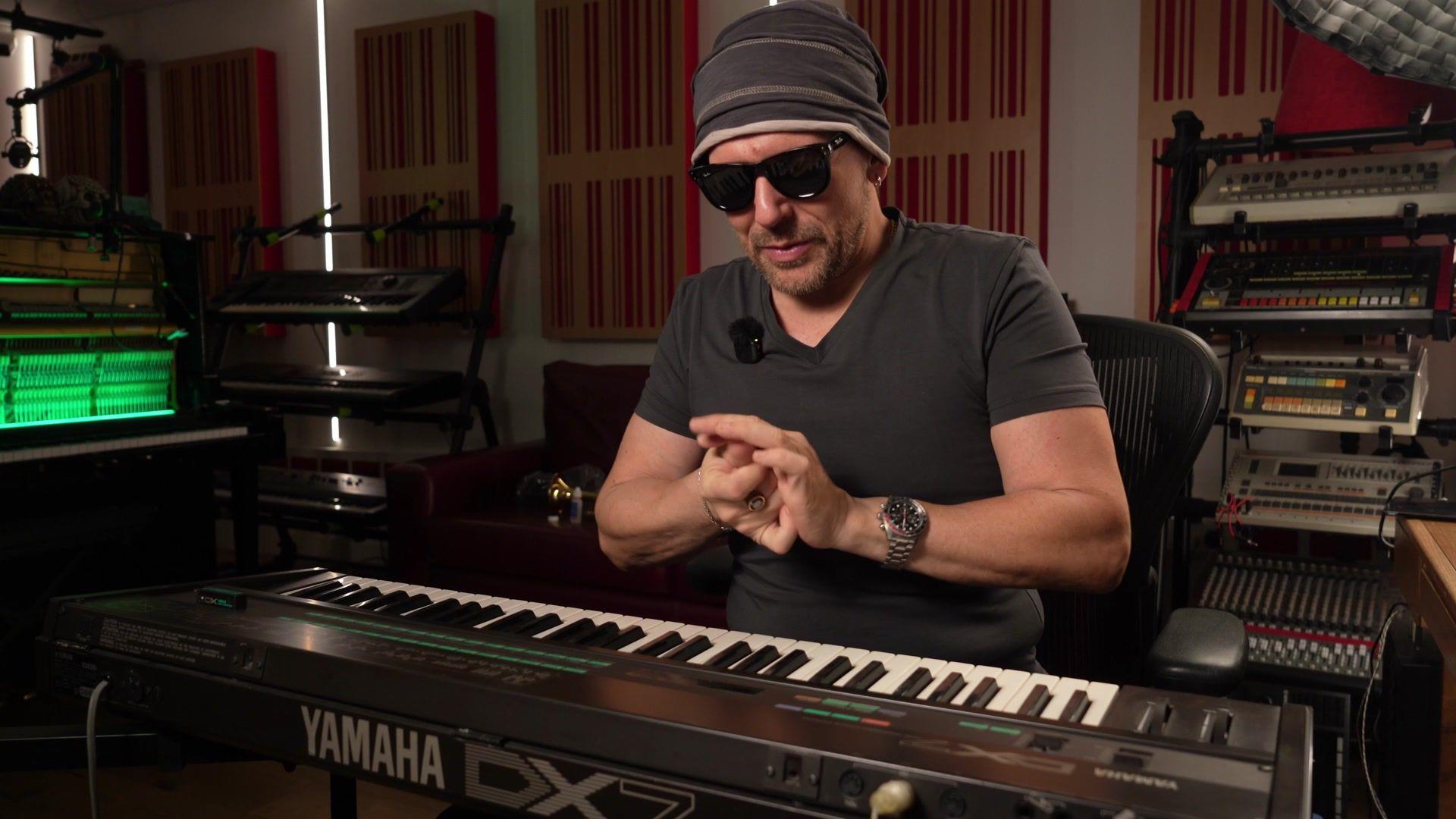
Then I tried the factory brass on my original DX7. Honestly? Tragic. It sounds more like a Tyrolean oompah band than a stadium anthem.
The problem is that the riff spans two octaves, and in FM two octaves are not as easy to tame as you'd think. So I went into the operators (pitch, output levels, ratios) until it behaved. FM is beautiful, but you can go from brass to harmonica in one second.
On its own the DX7 still isn't the sound. Layered under the JX-8P, though, the two mix together really nicely, and that's exactly the point.
The intro: no PPG this time
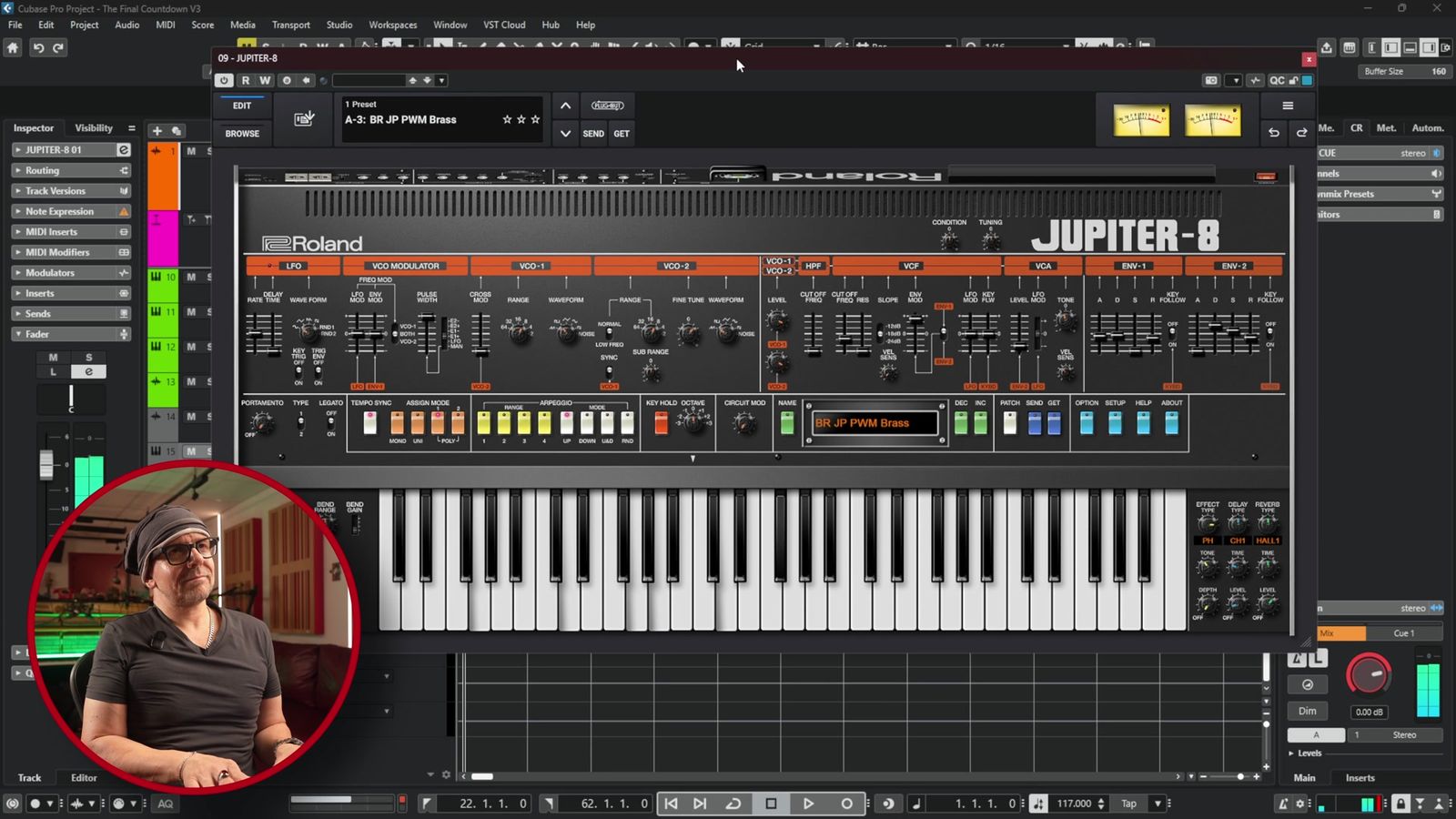
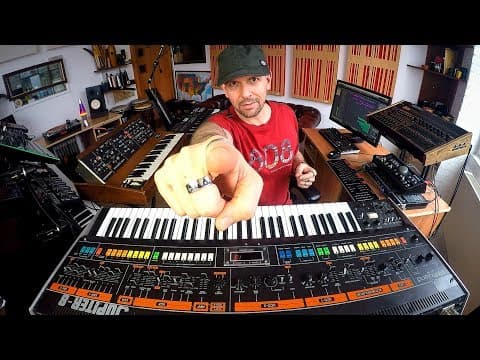
That intro is essentially a bed of pads, and I'd never really analysed it before. I'd read that a PPG Wave was used for the pads on the record. But instead of hunting for a PPG clone, I reached for something I know inside out: Roland's Jupiter-8.
- The sweeping intro line: a couple of sawtooths, an octave apart. The pitch bend is drawn in as automation, with enough release that the notes overlap.
- The analogue pad on top: a second Jupiter-8 with a slower attack.
- The big, boomy "bam, bam, bam": a third Jupiter-8, a sawtooth an octave up and an octave down, with the envelope shaped to get that "nya" out of it.
There are also some slowed-down, sample-like effects in the intro. I left those alone, because they're sound effects and today is about synthesizers.
Drums
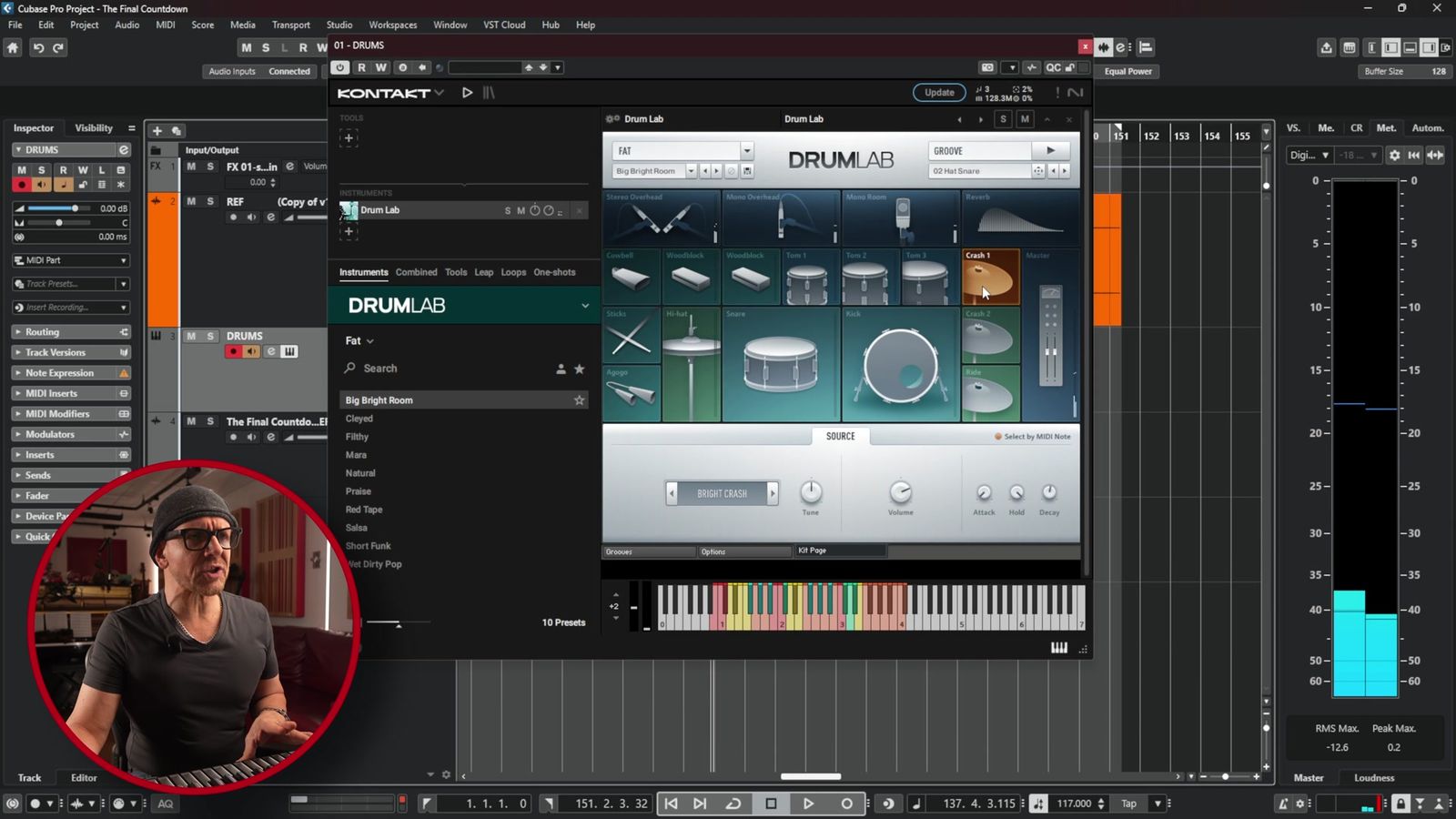
The kit is a strange mix: very electronic and very acoustic at the same time. My guess is a real snare drum with tons of non-linear reverb, AMS-style. I built mine in Kontakt, with a separate kit for the crashes and that hi-hat break I'm very proud of.
Listening closely also explained a famous story. Producer Kevin Elson, the man behind Journey, wanted to put "four on the floor" under the song. The band tried it for one day, then went back to the galloping feel.
Now I get it. The drums stick to the beat and don't even bother with eighth notes, because the gallop already has plenty of them. Fill those in and you kill the gallop.
Bass
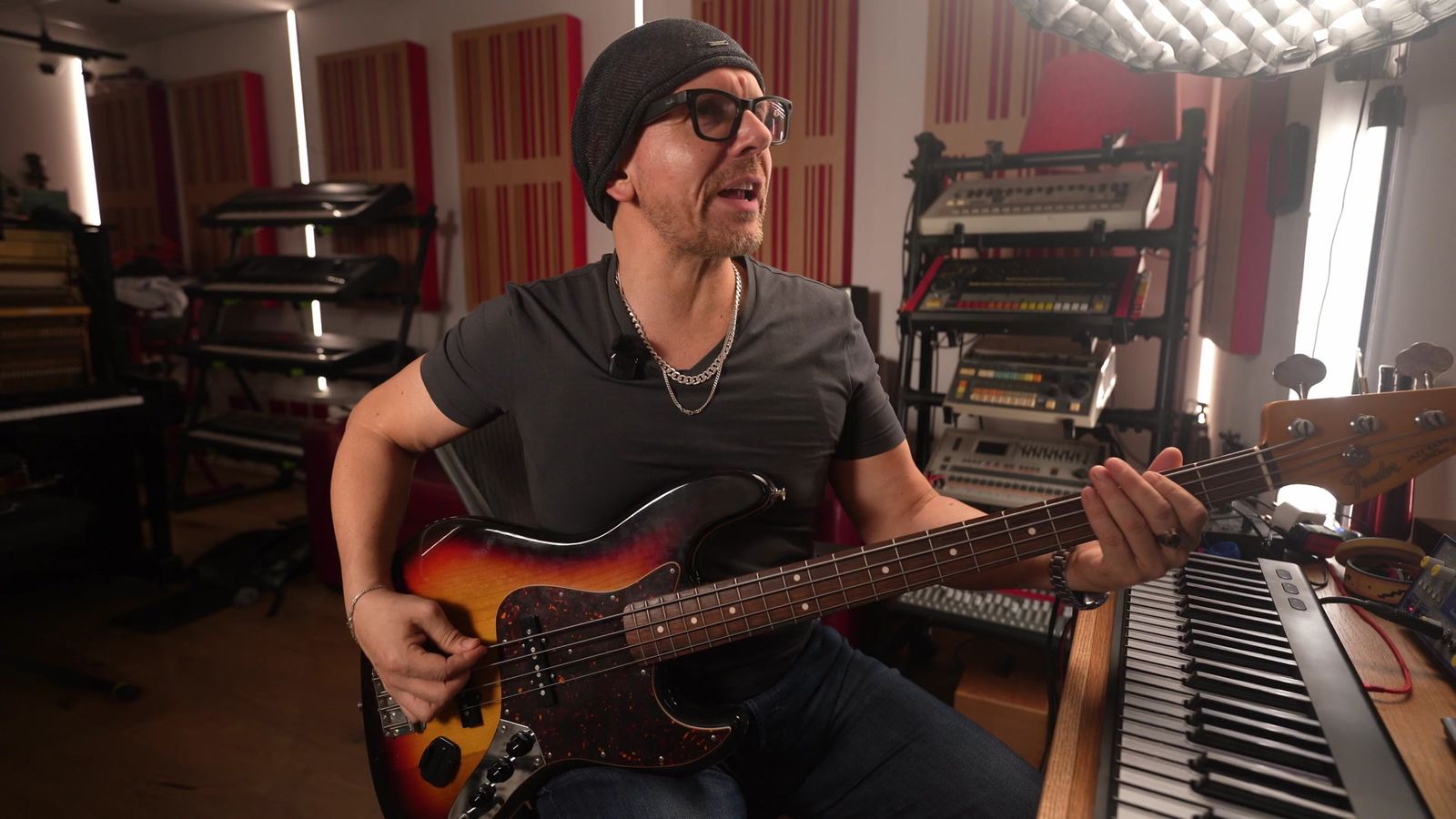
I always suspected the bass wasn't playing what the guitars play, and footage of John Levén confirmed it. Instead of galloping constantly, which would be a little too much, the bass plays a simpler version built around a long, held note. He uses that note as a springboard for fills, and you can see him lift his palm to let it ring.
I played it with a pick, like Levén did. I'd never tried to keep a pick part going for more than 30 seconds, and let me tell you: it's brutal. A few punch-ins were needed.
Guitars
Today I felt lazy, so the rhythm guitars come from UJAM's Virtual Guitarist IRON 2. You play the chords and it does the strumming, and I kept it staccato rather than legato.
The mix
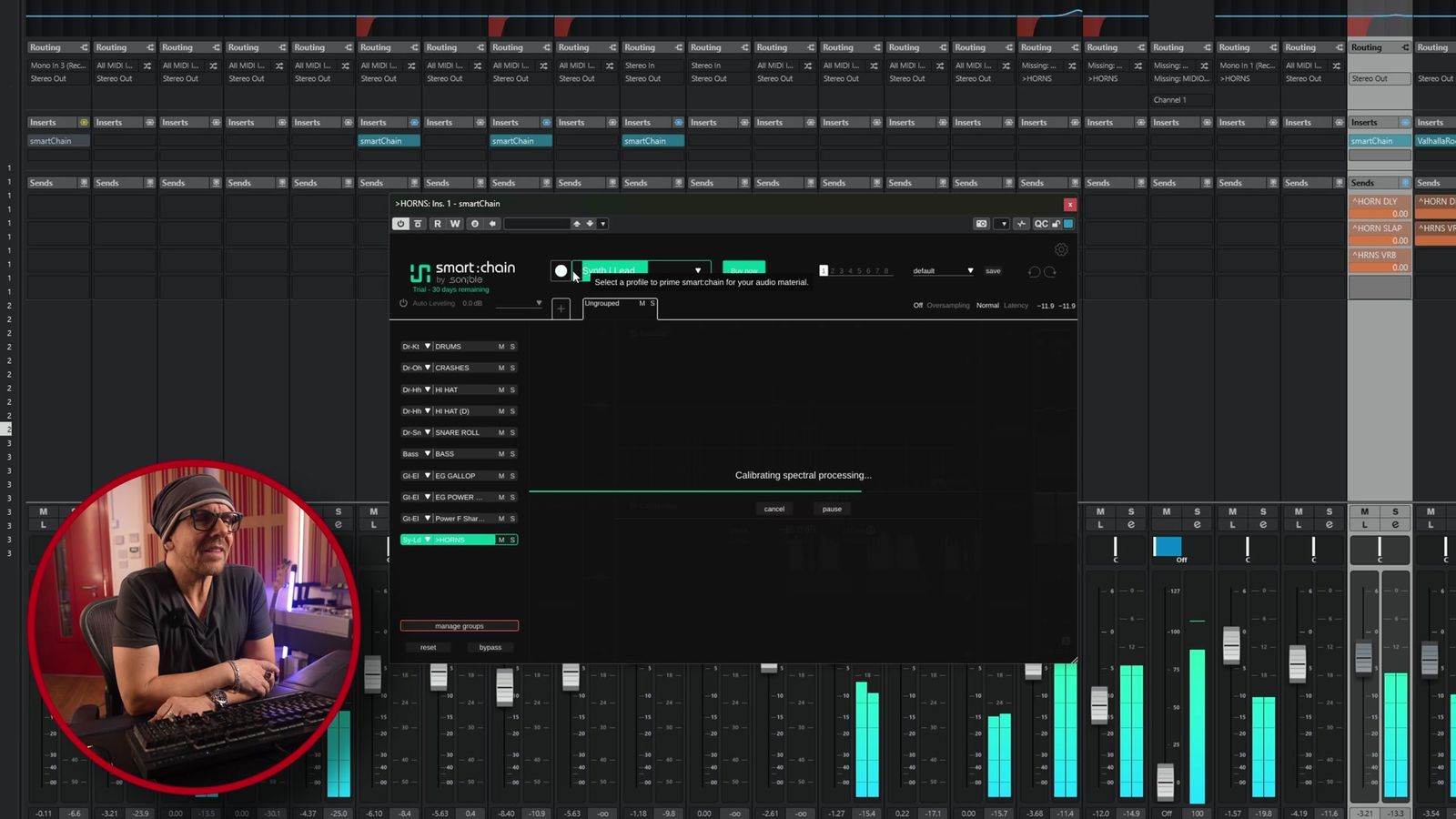
For the mix I used smart:chain by Sonible, who kindly support this channel. It combines EQ, compression, saturation and automatic levelling in one plugin that works across all the tracks in your session. You tell it what each track is (drums, bass, electric guitar, synth lead), let it learn, and it sets up a starting point you can then refine.
The moment that got me was on the brass. My horns were a bit too bright, so I called up smart:chain, told it the track was a synth lead, and it took the top end down in one pass, with no specifying anything. Add some Valhalla reverb, a slap on the brass that I also send to the lead, and we're very close.
Get the MIDI, the multitrack and a free printable
I'm making the MIDI for the entire song and the multitrack available.
And if you join my mailing list, you get a free, colourful printable: a visual history of this sound, this song and this riff. Print it out and put it on your studio wall.
Sources: Wikipedia: The Final Countdown (song) · Wikipedia: The Final Countdown (album) · Ultimate Classic Rock · Guitar.com
From the Doctor Mix shop