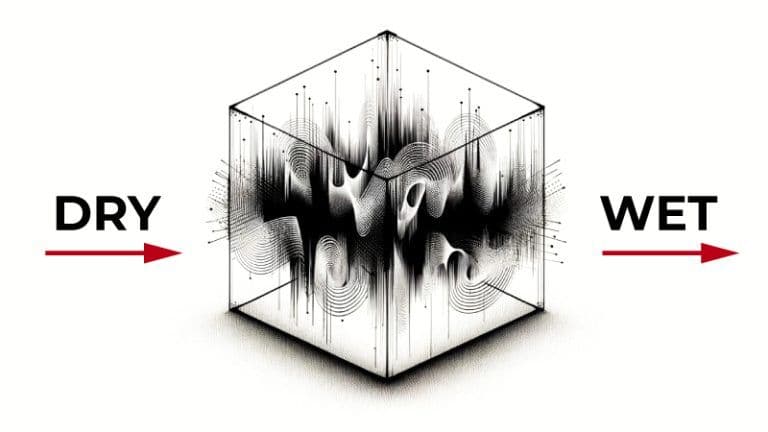
Reverb is one of the most powerful tools in mixing — and one of the most misused. Get it right, and your mix gains depth, dimension, and a sense of space that makes everything feel alive. Get it wrong, and you end up with a washed-out, muddy mess.
Here’s how reverb actually works, and how to use it to make your mixes sound professional.
What Is Reverb?
Whenever a sound is produced in a physical space, it radiates outward and bounces off surfaces — walls, floors, ceilings, furniture. Reverb is the combination of all these reflections arriving at your ears at slightly different times. It’s what tells your brain “this was recorded in a cathedral” versus “this was recorded in a cupboard.”
Our ears are extraordinarily sensitive to reverb. We use it instinctively to judge the size, shape, and materials of a space — even with our eyes closed. When you add reverb in a mix, you’re creating a virtual space for your instruments to live in.
The Two Components of Reverb
Early Reflections
These are the first bounces off the nearest surfaces. They arrive quickly after the original sound and give the listener an immediate impression of the room’s size and shape. Strong early reflections suggest a small, hard-surfaced room. Weak or diffuse early reflections suggest a larger, softer space.
The Tail (Late Reflections)
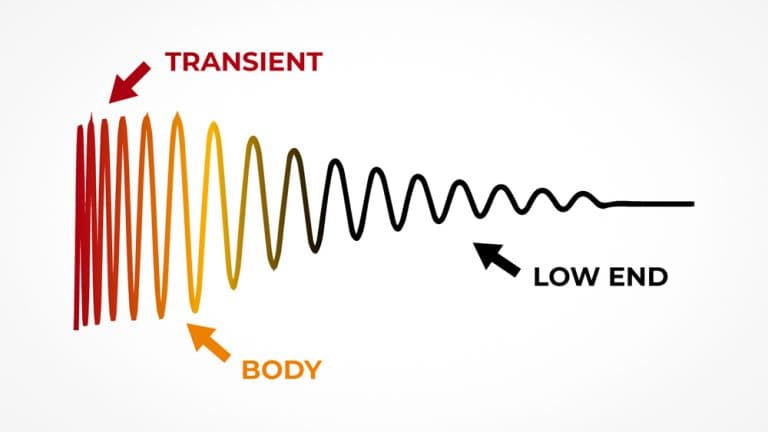
After the early reflections, sound continues bouncing between surfaces, creating a dense wash of overlapping reflections that gradually decays. This is the reverb “tail” — and its length and character define the overall feel. A 0.5-second tail feels intimate. A 3-second tail feels grand. A 6-second tail feels like a cathedral.
Creating the Right Space for Your Mix
The balance between early reflections and tail is how you sculpt the ambience. Think about what suits the music:
- Jazz trio: A short, warm reverb (1–1.5 seconds) emulating a jazz club — enough to feel the room, not enough to blur the instruments
- Rock ballad: Medium plate reverb (1.5–2.5 seconds) on vocals, shorter room on drums — creates emotion without losing punch
- Electronic/dance: Very short or no reverb on the low end, subtle spatial effects on synth pads, careful use on vocals to maintain clarity on the dancefloor
- Orchestral: Long hall reverb (2.5–4 seconds) to emulate a concert hall — this genre needs space to breathe
Practical Reverb Tips
Use Send/Return, Not Insert
Always set up reverb as a send effect, not an insert. This lets you control how much of each track feeds into the reverb independently. It also means all your instruments share the same reverb space — which is how real rooms work. Multiple different reverbs on individual channels can make a mix feel disjointed.
EQ Your Reverb
This is the secret most beginners miss. Put an EQ after your reverb and cut the low end (below 200Hz) and the extreme highs (above 8–10kHz). This prevents the reverb from muddying up the bass and keeps it from sounding harsh or fizzy. The result is a reverb that adds space without cluttering the mix.
Pre-Delay Creates Clarity
Pre-delay is the gap between the original sound and the first reverb reflection. A 20–40ms pre-delay lets the initial attack of vocals or instruments cut through before the reverb kicks in. This is especially important for vocals — it keeps them upfront and clear while still sounding “in a space.”
The Subtlety Rule
If you can clearly hear the reverb as a separate effect, you’re probably using too much. Good reverb should feel natural — like the instrument was recorded in a real space. Solo the reverb return to check it sounds good, then blend it until it’s barely audible. That’s usually the sweet spot.
Common Reverb Types
- Room: Short, natural — great for drums and guitars
- Plate: Smooth, dense — classic on vocals and snare
- Hall: Large, spacious — orchestral instruments, ballads, pads
- Chamber: Warm, mid-length — versatile, works on almost anything
- Spring: Characterful, slightly metallic — guitar amps, vintage sounds
Learn More
Reverb is just one piece of the mixing puzzle. For the complete professional mixing process — including compression, bus routing, the 10 golden mixing rules, and real session walkthroughs — check out The Official Guide to Mixing.
If you want to hear how professional reverb sounds on your own tracks, send us your mix and we’ll show you what’s possible.
From the Doctor Mix shop
Sounds that go with this article

Get More Tips Like This
Join the Doctor Mix mailing list — production tips, new tutorials, exclusive offers. No spam, unsubscribe anytime.