The Commodore 64 Is Back! Unboxing the C64 Ultimate with Cris Blyth
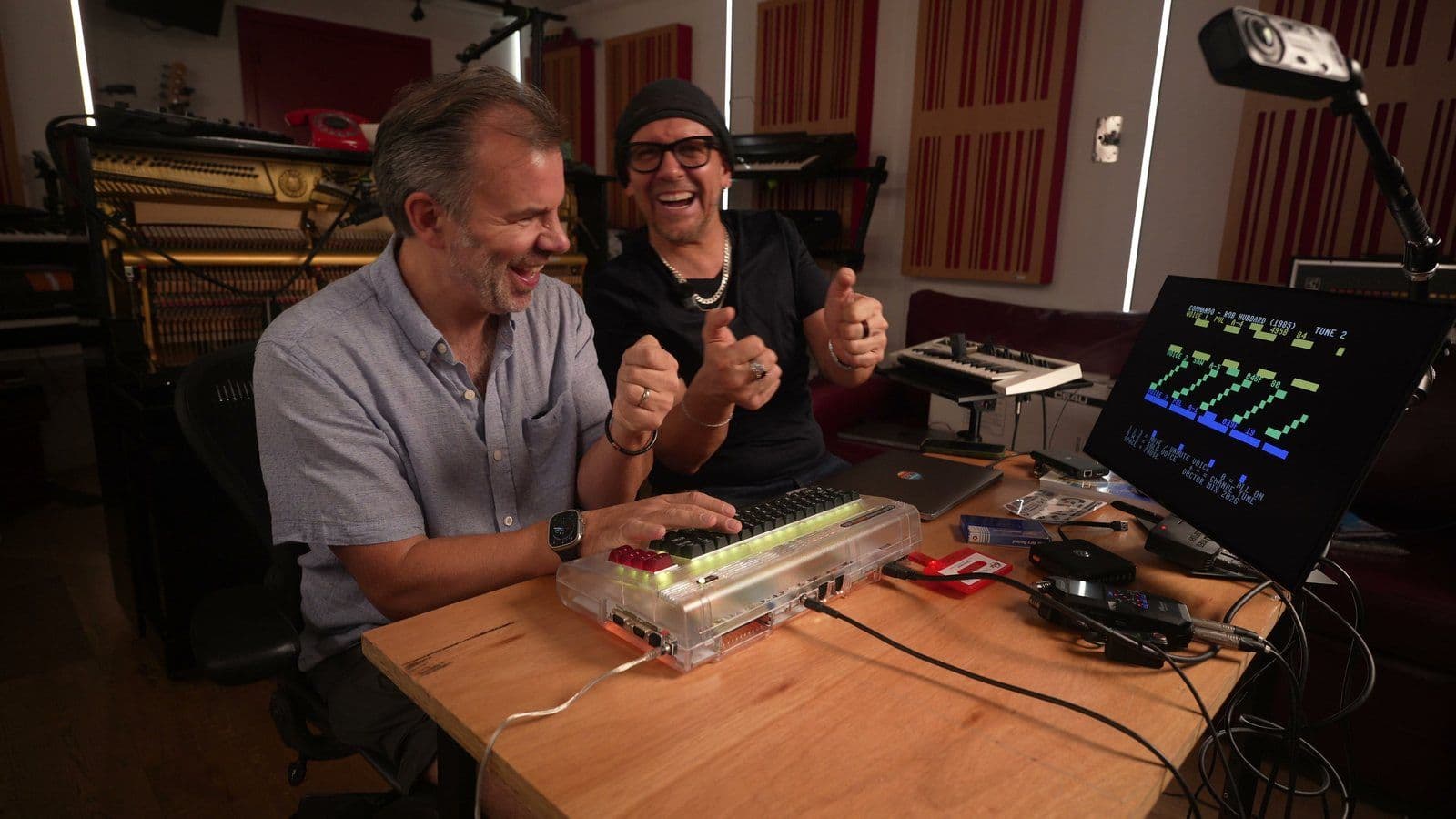
You know how much I love the Commodore 64. I play with it, I grew up with it, I even turned one into a synthesizer. So when the new Commodore 64 Ultimate arrived at the studio, I didn't want to open it on my own. I wanted someone who had actually been involved in making it.
So I called up my friend Cris Blyth, who popped across from California to open it with me. Big thank you to Commodore for supporting the channel and making this video possible.
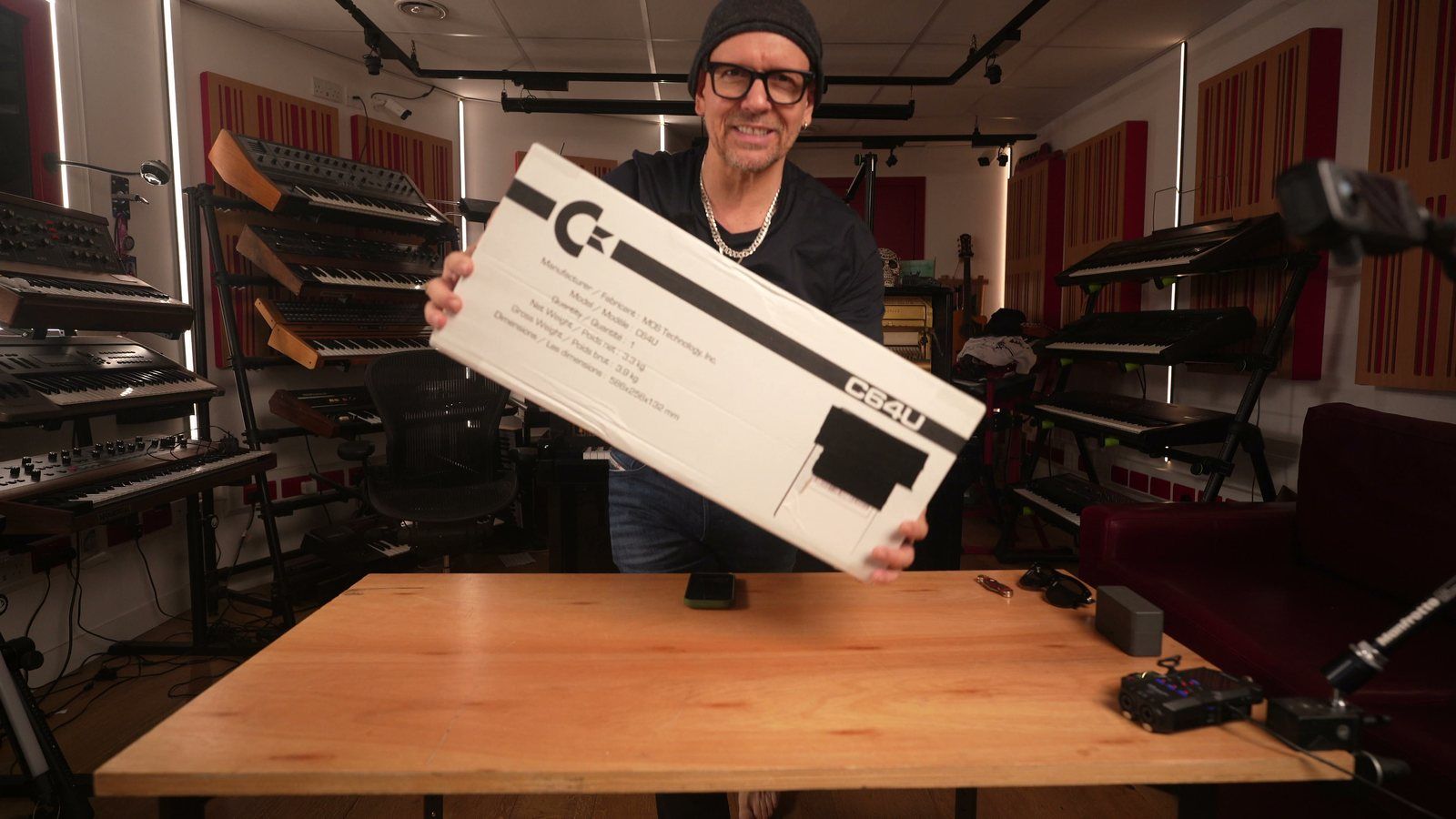
A box designed by someone who cares
Cris worked on the packaging. He's quick to say it was a team effort, but it meant I got a guided tour of every detail. The team took their inspiration from the original Commodore 64 box from back in the day. They went as far as the plain shipping cartons the machine travels in from the factory, the ones a customer normally never sees. Those were made to look like the originals too.
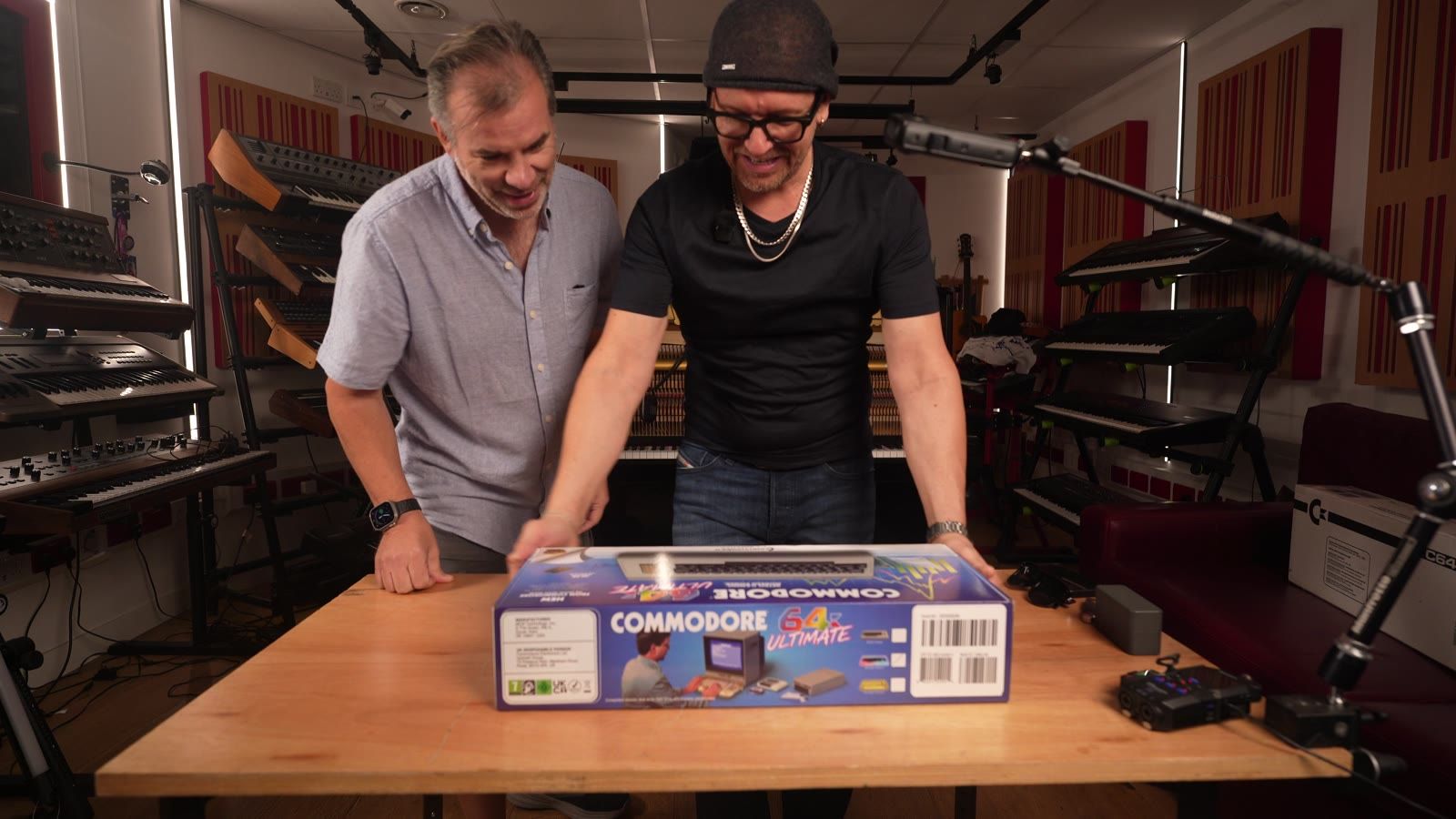
Lift the lid and the first thing you read is "Welcome back to the world of friendly computing." Open the next layer and it says "Welcome to your digital oasis." Honestly, it felt like Christmas.
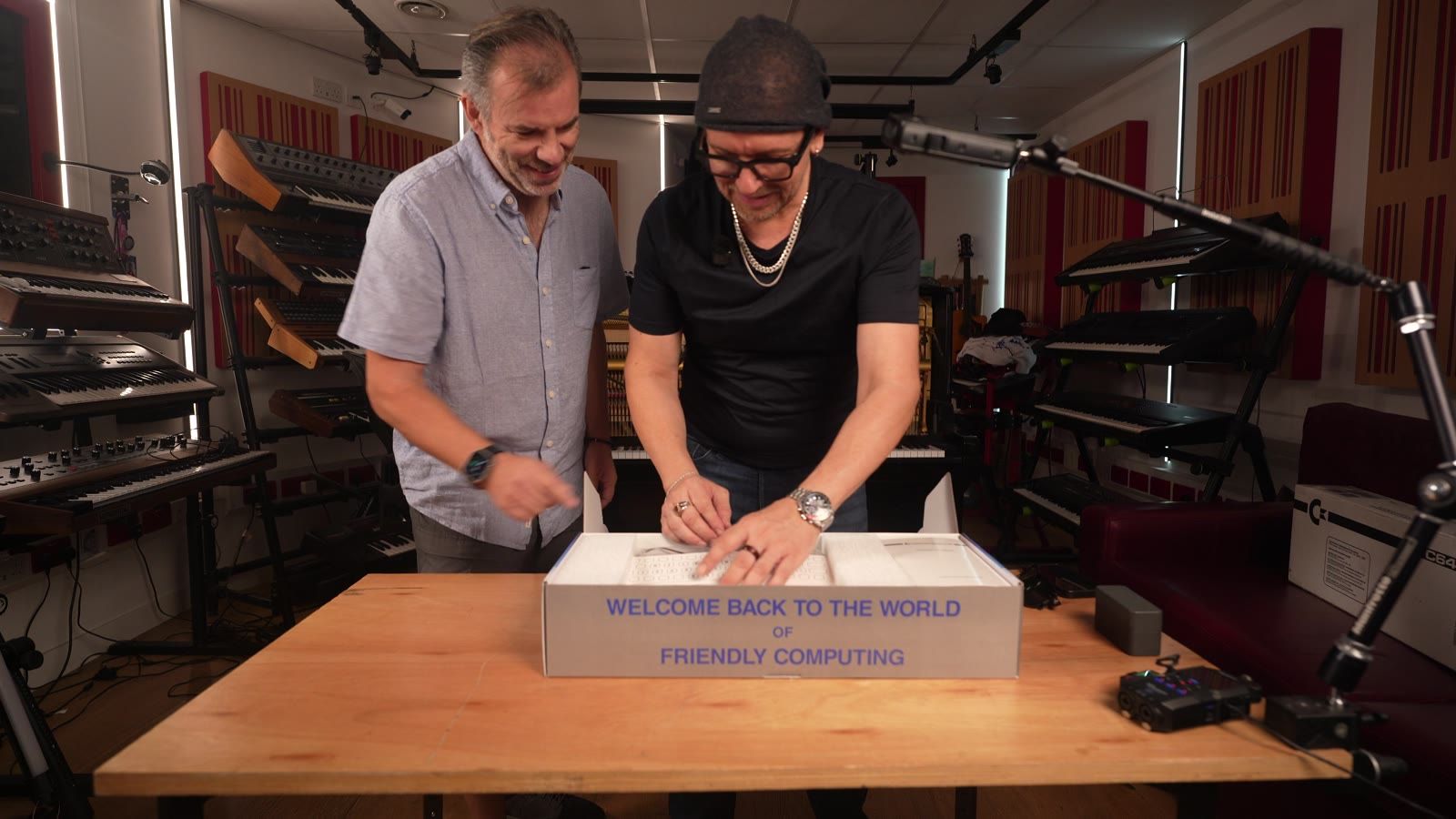
Everything else came out one piece at a time:
- "The very second." The original Commodore 64 had "the very first". This one has "the very second", and inside what looks like a cassette case is a USB stick with all the software on it.
- A Commodore-branded HDMI cable, a sheet of stickers, and a power supply with international adapters, UK plug included.
- A spiral-bound manual that, like the original, you can actually learn from. There are listings to type in, and it points you to what's on the stick.
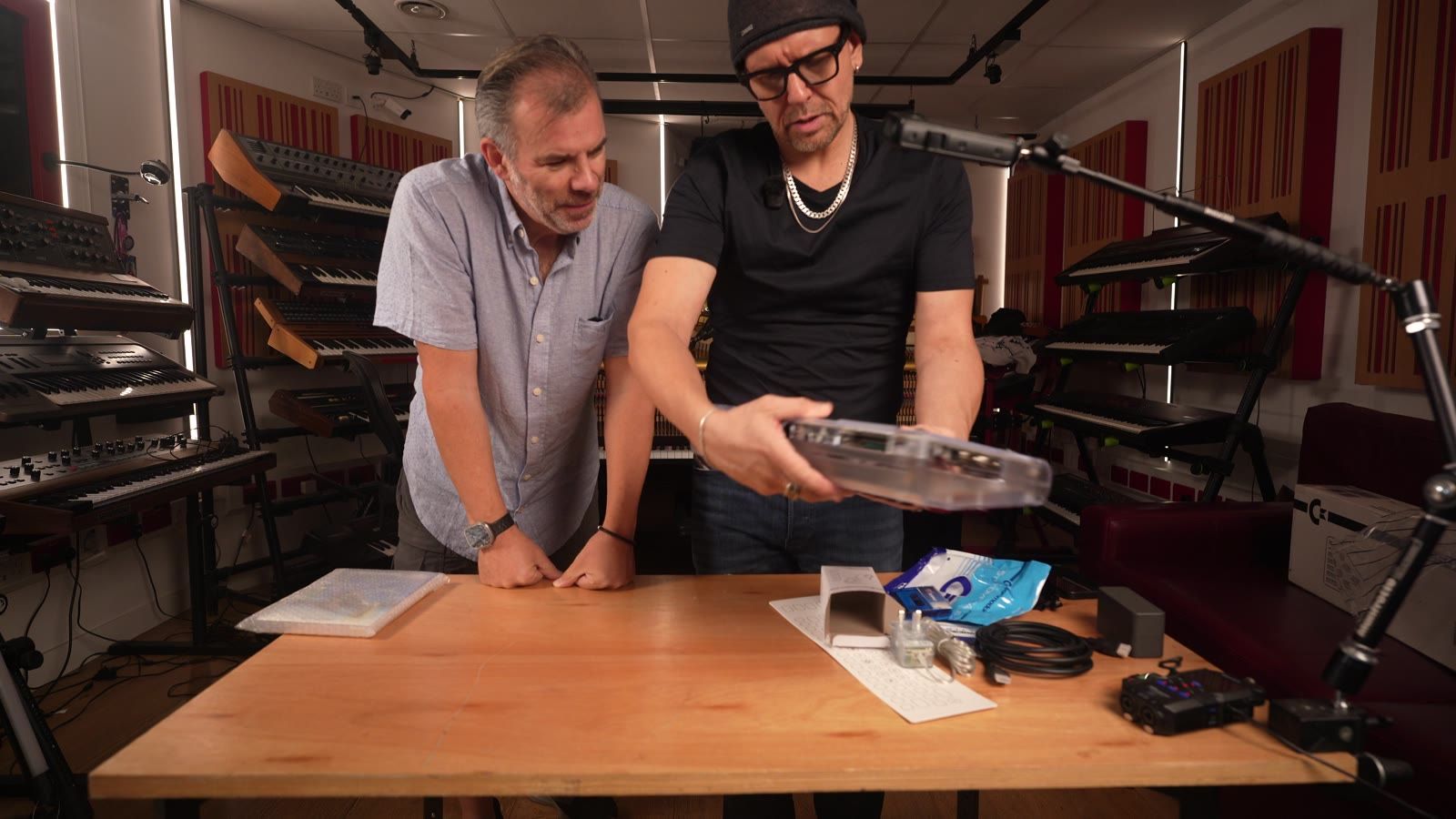
The Starlight: a thing of beauty
Ours is the Starlight edition, with a translucent case that lights up once it's switched on. It feels solid and substantial. The keys make the same sound as the old ones, maybe better. Look inside and the team's signatures are laid out in the shape of the Commodore logo.
Round the back you get HDMI, Ethernet and two USB ports. On the side are joystick ports for your original gear, and it connects to Wi-Fi too. It's also designed to be opened up. It uses brass inserts, so you can unscrew it as many times as you like without wearing out the plastic, and there's an SD card slot.
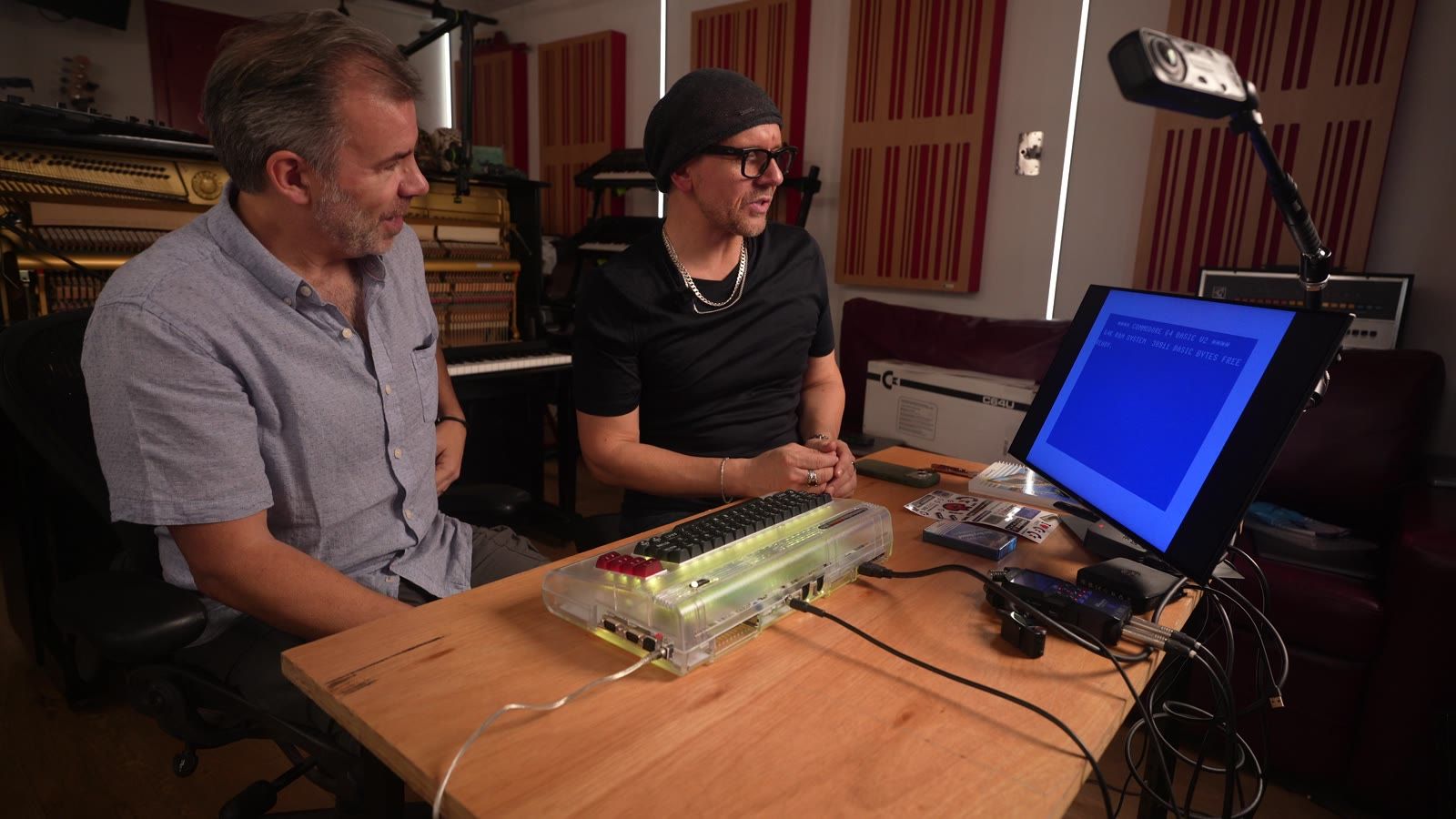
The moment of truth
We plugged it in and it booted. Click the multifunction switch and you're in the menu. The first job is setting the video output to full HD, and then you're back in a proper 4:3 Commodore 64 world. There's a file browser for the USB stick and the SD card. It even still makes the floppy drive noises when it loads.
This is the part that got me as a synth person. Inside the case are two zero-insertion-force slots, so you can fit two real SID chips and it addresses them properly. On top of that, there are eight SID chips built into the FPGA.
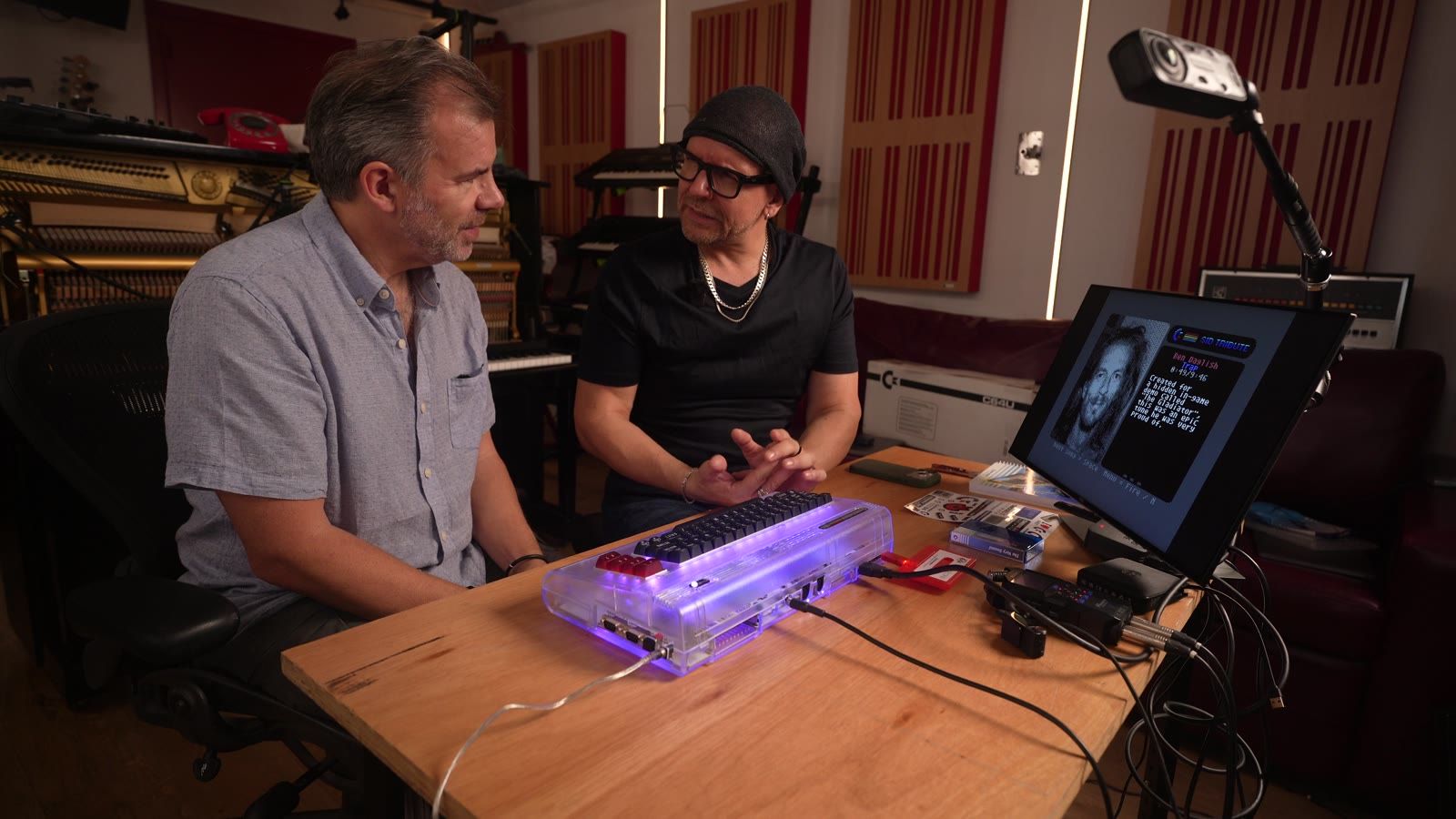
Why the SID chip was a proper synth
On the stick there's an exclusive section with BBS demos and a Commodore SID tribute, made especially for this machine. We heard Ben Daglish's Last Ninja and Forbidden Forest, and you can hear little details like the delay on the pulse width modulation. It sounds great.
Most people didn't realise this at the time. The engineer who designed the SID chip basically put a proper analog synth inside a home computer. I came to the Commodore 64 from the VIC-20, whose voices each covered only a limited range. The SID gave you three full-range voices, each with its own waveforms, envelope and filter, plus noise. That's three channels of a real synth. Eight SIDs in the FPGA gives you 24 voices, so the new machine is an even bigger synth.
Playing games back then, there was suddenly this futuristic soundtrack alongside the 80s music I was listening to. It's the soundtrack of my youth. And one tune stood above all the others.
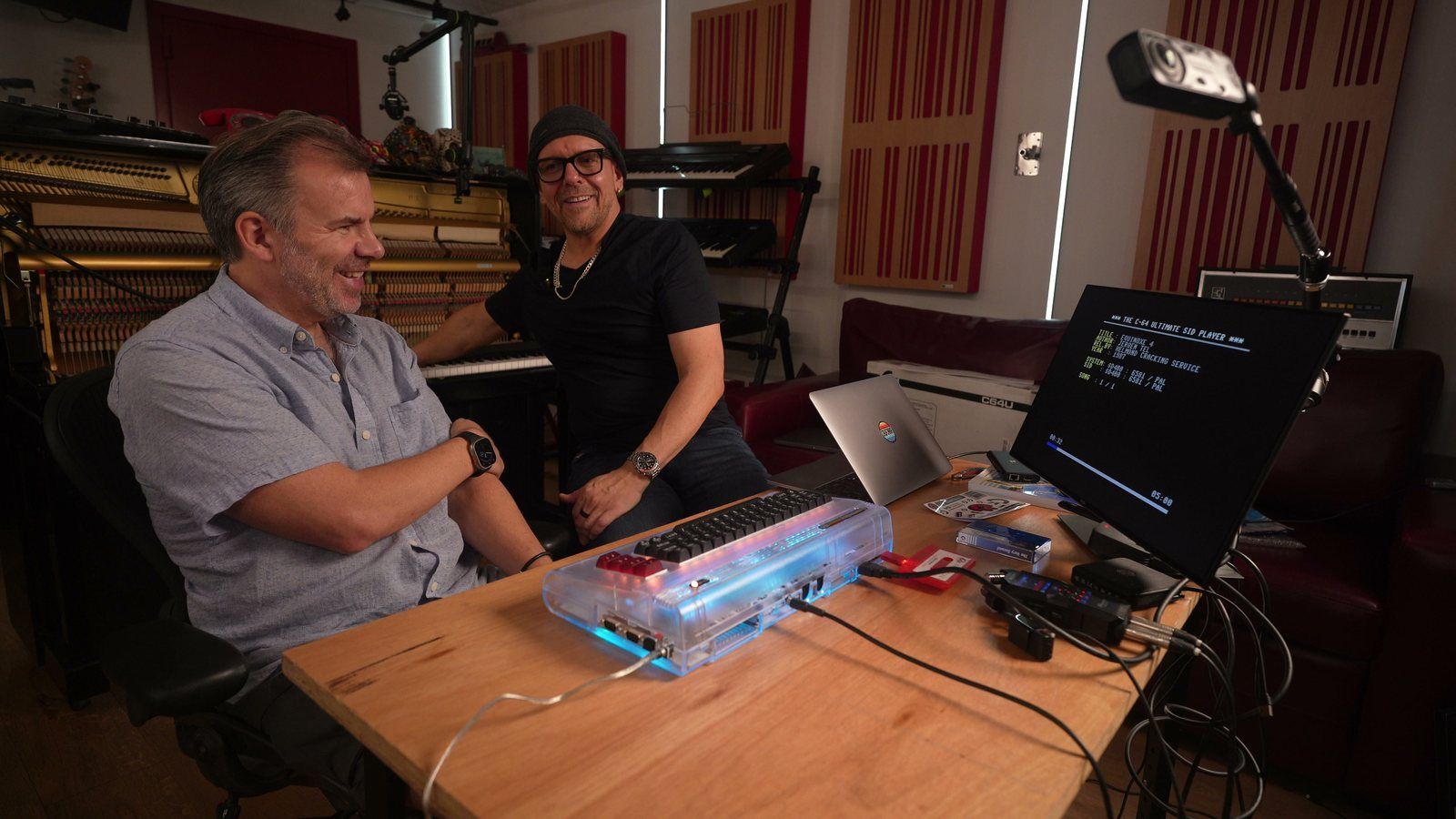
Commando: written in a single night
Rob Hubbard's Commando was famously written in a single night, and if you ask me it's better than the arcade version. What fascinates me is how it was built. There was so little memory that you couldn't just write the music out. The tune is a set of sequences with smaller sequences inside them, and the player follows instructions like "play this bit twice" or "play it three times". If you want to go deeper into how that works, these two videos are brilliant: Luxocrates on how Rob Hubbard's music player worked, and Rolf R Bakke's oscilloscope view of Commando.
But I'd never heard anyone talk about the arrangement. So I asked Cris: could we use this machine to isolate the three voices? I wanted three lanes on screen, so you can see the waveforms and watch where the drums come in.
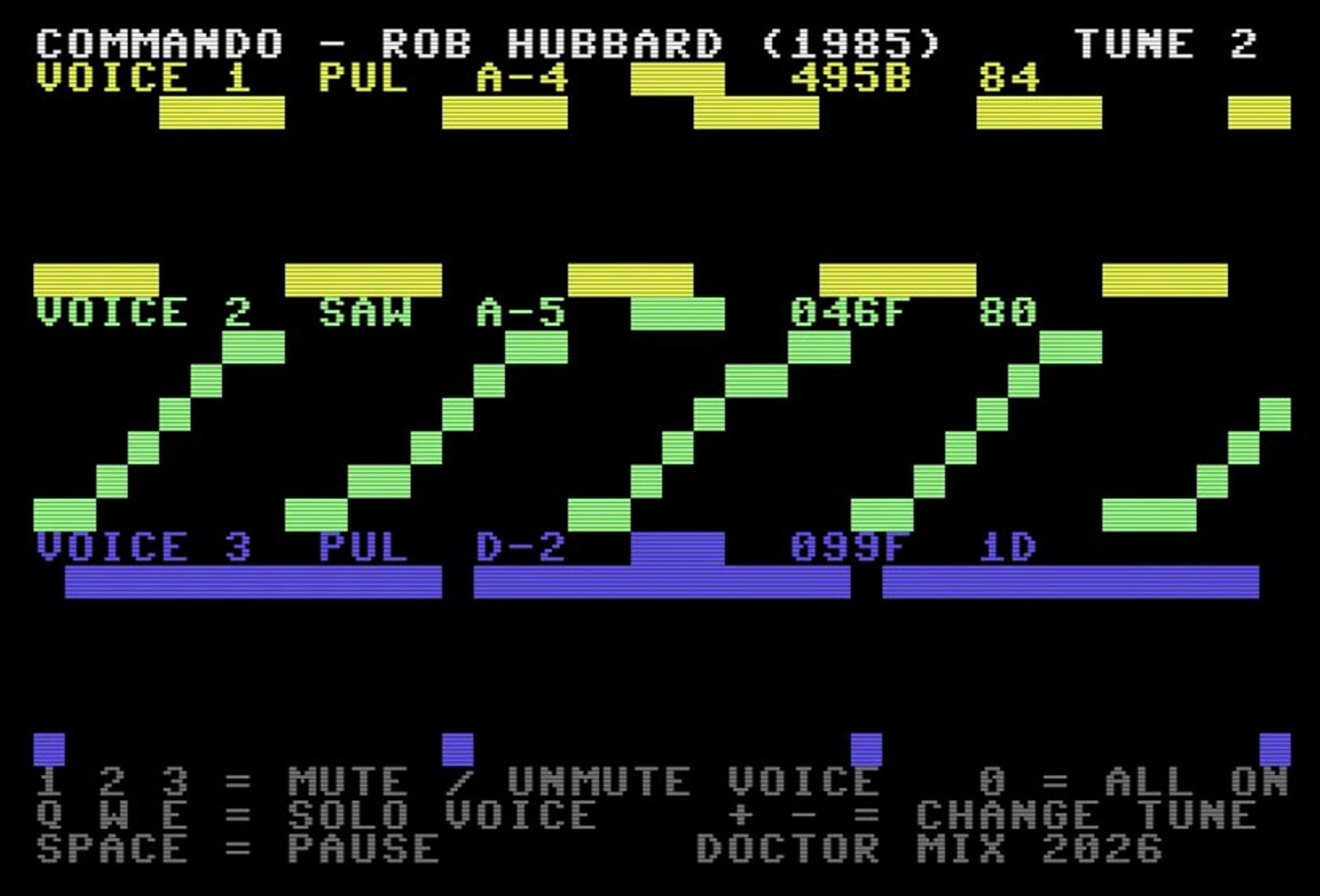
Commando, voice by voice
We took a break, came back, loaded the little program from the file browser and hit run. It worked first time. There it was: the Commando voice visualiser, with each of the three SID voices on its own lane. You can mute any of them with 1, 2 and 3, solo one with Q, W and E, and step through the different tunes. My reaction is in the video, and it wasn't very dignified.
Soloing the voices is where you really learn something:
- Voice 1 is a pulse wave with pitch bends all over it.
- The drums aren't a separate channel. The snare is the noise waveform on the attack of a note. A few milliseconds later the voice switches back to the pitched note, often an octave apart. The player treats the whole thing as a single note, which is how those fast runs and drum hits share three voices.
- Step through the tunes and you get the high-score screen and the end music too. I couldn't resist muting and unmuting voices live, so in the video you get my breakdown and drop of Commando.
Confession time: I've actually spoken to Rob Hubbard. Years ago I'd done some bad things to a public telephone at the local leisure centre so I could call anyone in the world. The first person I rang was Rob Hubbard. I said hi and asked him about his music.
Rob Hubbard, if you're watching: we love you.
Try the visualiser yourself
In the video I promised you could have the visualiser, so we've built a version that runs right in your browser. Load your own copy of the Commando SID file and you get the same three lanes and the same mute and solo controls. Your file plays on your machine and is never uploaded.
If you'd rather play the SID than watch it, DoctorMix64 turns your browser into a Commodore 64 synth, also free. And if this video made you want one of these machines, you can check out the Commodore 64 Ultimate here.
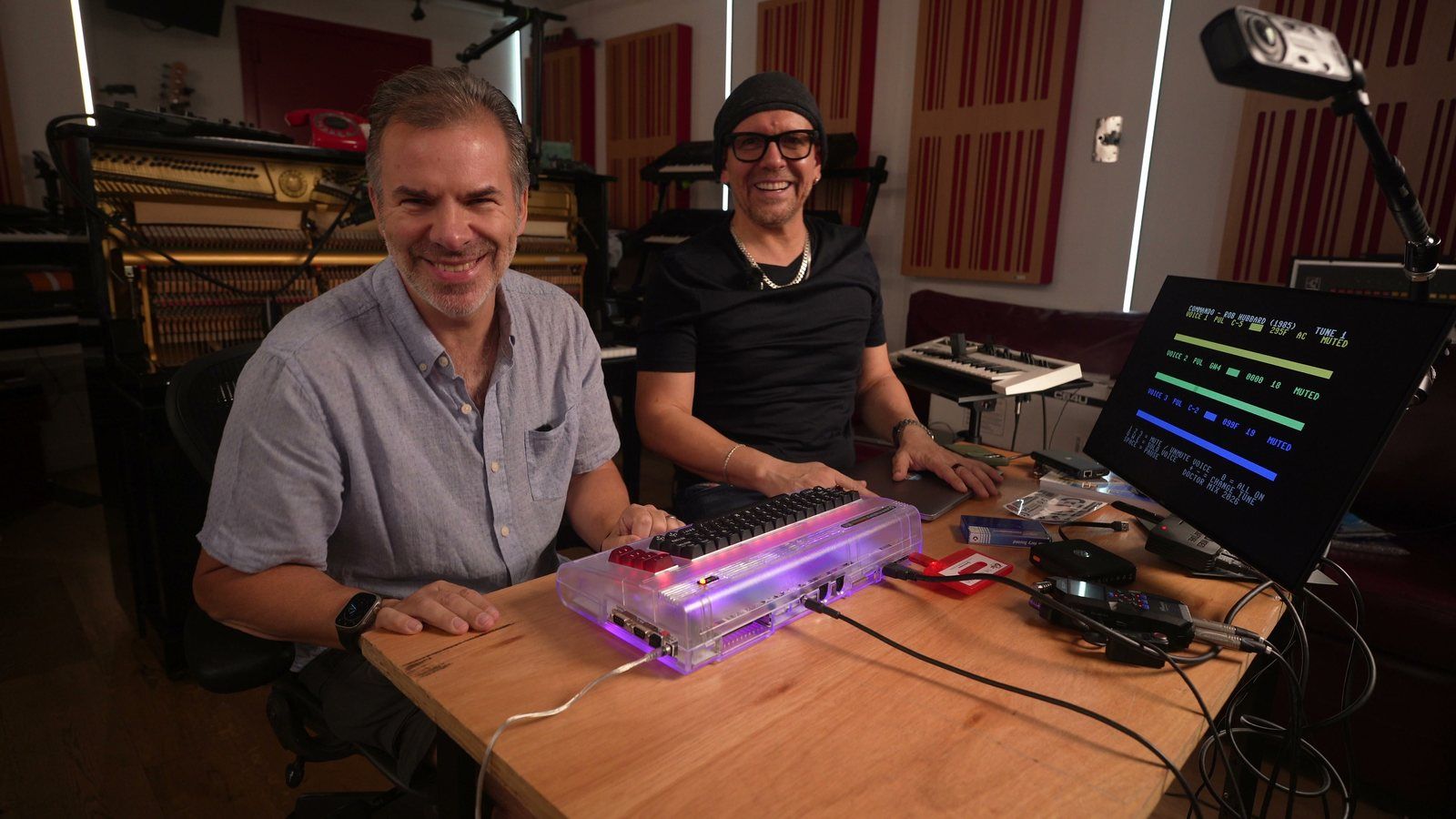
Thank you to Cris for making the trip. Go and subscribe to his channel. Then he had to get back to California, but only after a cup of tea, of course.
Which Commodore 64 tune was the soundtrack of your youth? Tell me in the comments on the video.