The Man Behind Jam & Spoon on Techno, Trance and the 909
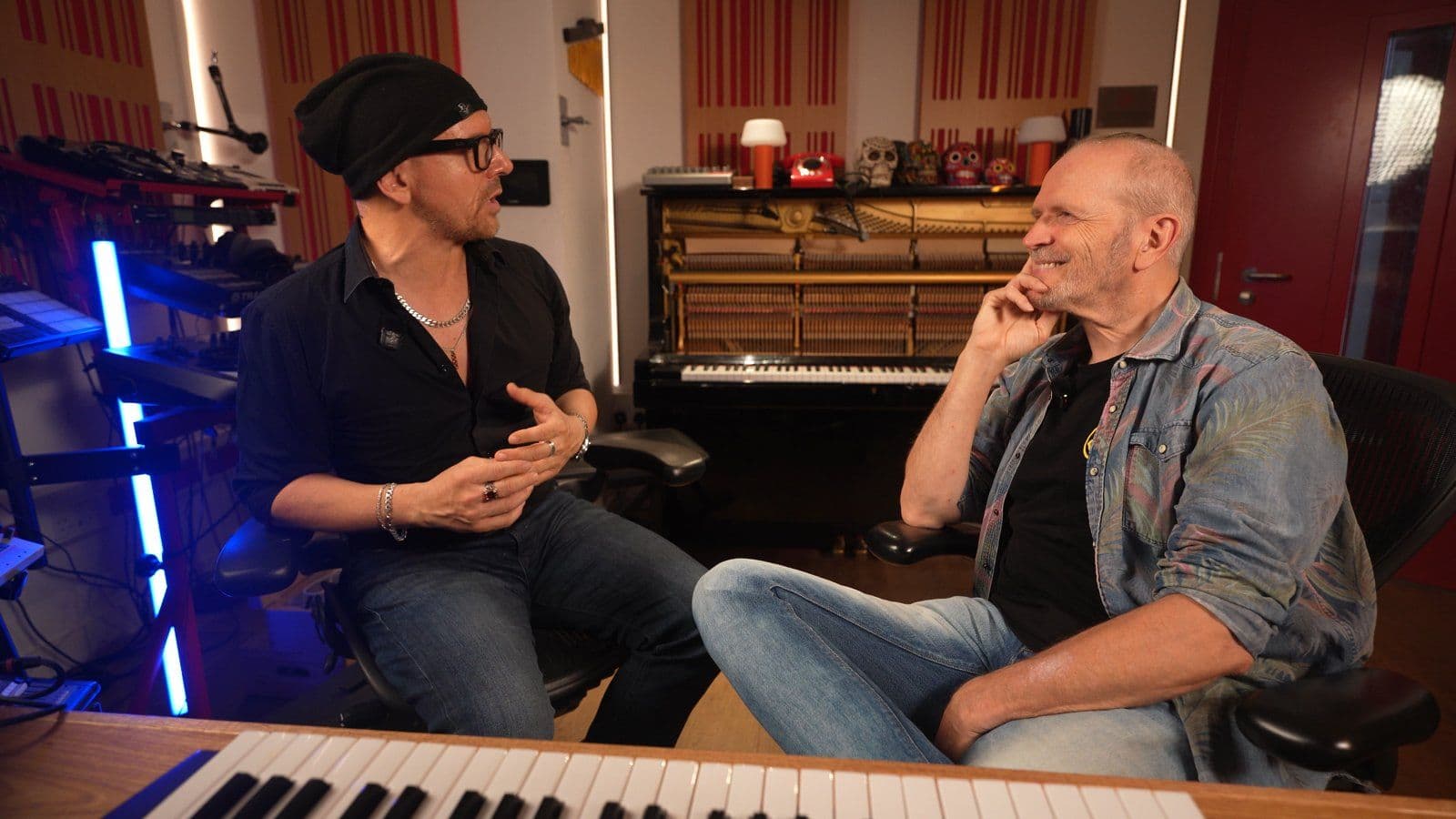
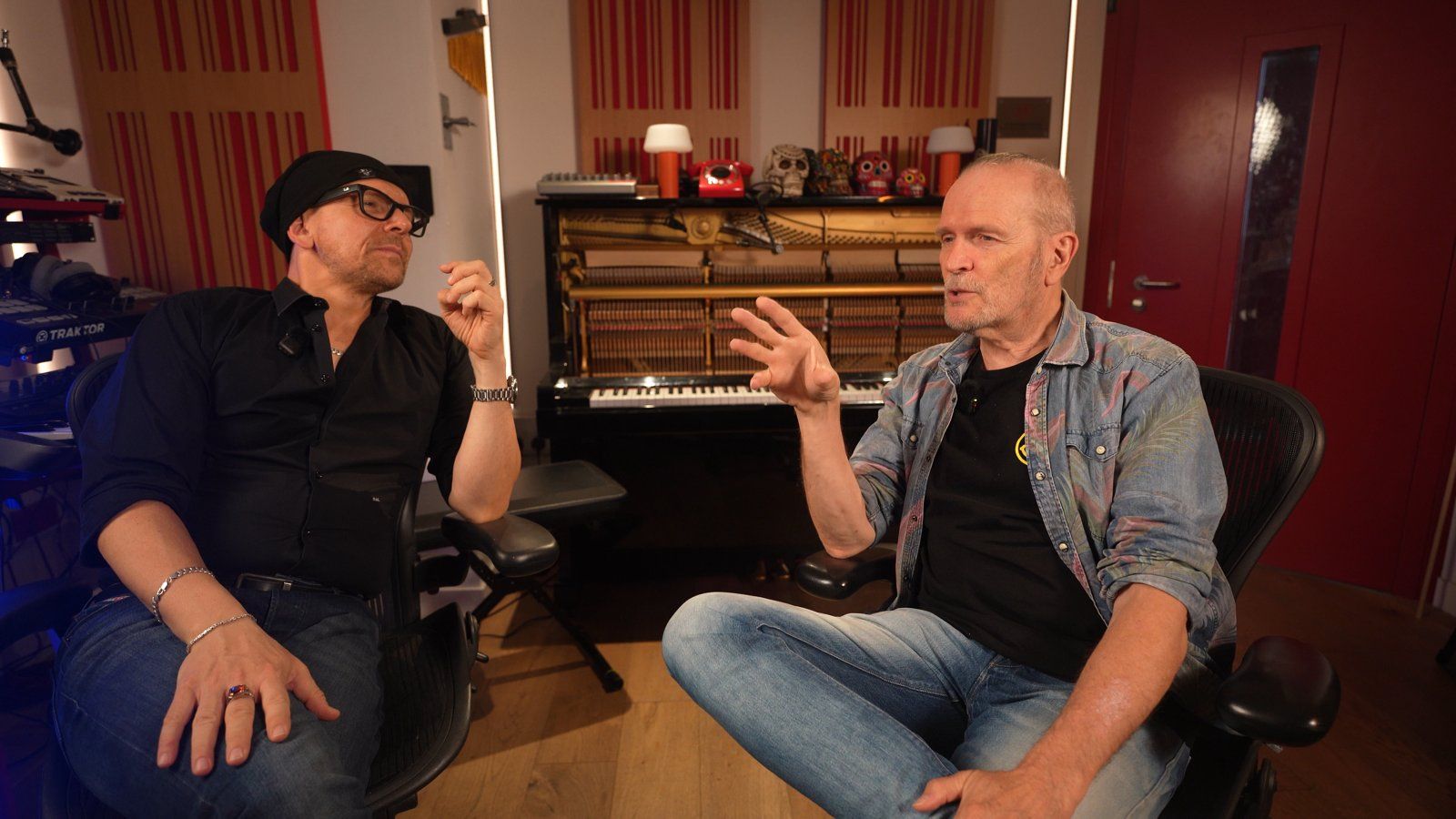
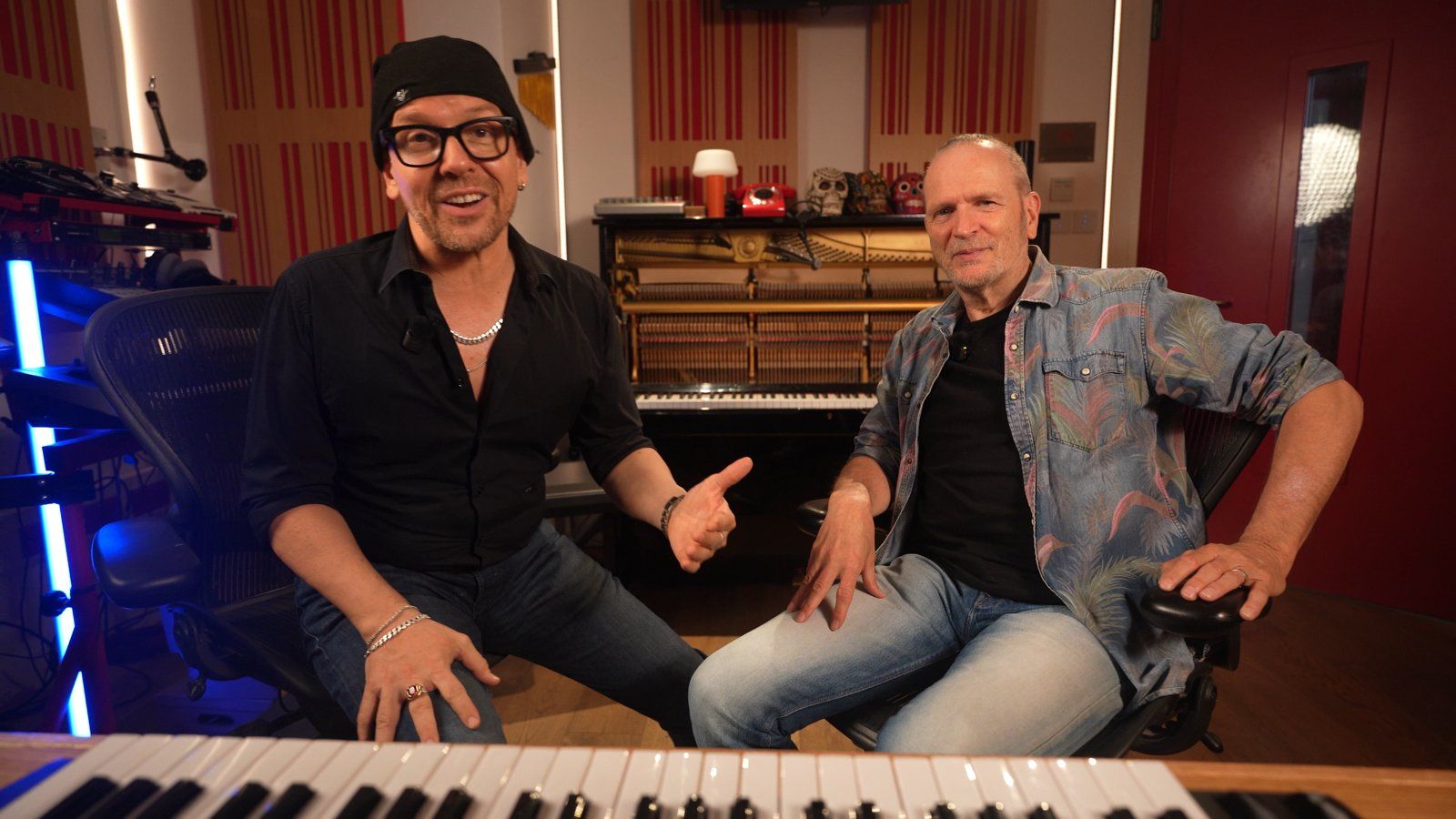
After we built a techno track together from one synth and a 909, Jam El Mar and I kept talking: house, techno, trance, drum machines, Berlin, DJing. At some point it was obvious we should have the cameras rolling. So we turned them back on and sat down for the best part of an hour.
Jam is Rolf Ellmer, one half of Jam & Spoon with the late Mark Spoon. They made records that people still lose their minds to on a dance floor. Here are the parts of the conversation I keep coming back to.
"There are no limits in music"
I started by playing him Robert Miles' Children and asking what separates trance from melodic techno. He didn't want to answer, and his reason is a good one.
People always tend to put everything into categories. If you get inspired by a certain track and you translate it into your own personal style, it doesn't matter what it's called. As long as you have inspiration and ideas, put it down and bring it to people's ears.
When he came into the scene in the late eighties and early nineties, everyone played everything. Mark Spoon could go from hip hop to house to Belgian techno in one set. Jam & Spoon got labelled trance (some people even call them its inventors, which he doesn't think is true). The label wasn't bad, he says. It just limited how people heard them.
Berlin, the Wall and the birth of a scene
I put to him that house and techno were a cultural and social revolution, not just a style. Disco with more grit, made by the same crowd that had been told disco was over.
His answer took us to Berlin. When the Wall came down, the East–West tension seemed to vanish overnight and everyone believed it would be peace forever. The whole electronic scene, techno and trance and everything else, was born out of that feeling. The freedom in the music, he says, was simply what that moment sounded like.
And it moves in circles. The fast, hard rave sound of Rotterdam and the late nineties came back after the pandemic as hard techno at 155, 160, even 170 BPM. Life goes round in circles, as he puts it.
Tangerine Dream, not Kraftwerk
I grew up obsessed with Kraftwerk, and they're usually everyone's answer for German electronic influence. Not Jam's. He respects them but always found them a bit dry and mechanical. What got him was Tangerine Dream: Rubycon, Ricochet, Phaedra. That's where his love of pads comes from, and you can hear it all over the Jam & Spoon records.
He also met Jean-Michel Jarre once in Paris, for a millennium project with Mark Spoon that never happened.
Three instruments for techno
Quick-fire question: his three favourite instruments for making techno. No hesitation.
- Roland TR-909
- Roland TB-303
- Roland Juno-106
"You can't emphasise enough how Roland shaped the sound of electronic music," he said. He also mentioned the record many people call the first acid house album, made with an 808 and a 303 by an Indian musician whose name he couldn't remember on the day. That's Charanjit Singh's Synthesizing: Ten Ragas to a Disco Beat (1982). It's a great example of something happening by accident and the world picking it up.
The ghost in the machine
This is my soapbox, and Jam let me get on it. Roland designed the 303 as a fake bass player and the drum machine as a replacement drummer. Both failed at the job they were built for. What they did instead was more interesting. People started tweaking them, and impossible sounds came out of the box: acid, techno, house.
Drum machines never replaced drummers. They bred a new kind of drummer, one who played to the click. Then samplers with quantise switched off gave us J Dilla's loose, uneven feel, and drummers like Questlove started playing like an MPC. Every disruptive technology does this, and I think AI will too. Once we've explored the ghost in the machine and run out of ideas, musicians go back to the blueprint and write a new one.
Jam's response: "I don't have anything to add. You said everything."
A 909 for 500 marks
Getting hold of these sounds wasn't easy back then. For a while Jam had only a bad 909 sample. Then he found a real one, owned by a wedding-band musician who thought it sounded old-fashioned next to his newer, more natural-sounding Yamaha drum machine.
I think I gave him 500 marks. I took the machine and ran away as fast as I could, before he could change his mind.
Before that he'd worked with an E-mu Emax II and a Sequential Studio 440, then an Akai sampler that he expanded to 32 MB, which cost a fortune at the time. But the real 909 became his first choice from then on.
Real hardware vs samples
Why does the real thing matter if 909 sample libraries sound so polished? Jam's point: with a sample, you can shorten it and filter it and that's about it. On the machine you can really tweak the sound and make it fit the track. And the polished libraries can sound better than the original in isolation, until you put the original in a mix and hear its character.
My addition: Roland's engineers shared circuitry between voices to keep costs down. So when the snare and clap fire together on a 909, you get a strange phasing that only exists because of how the two sounds interact inside the machine. You can't get that from samples.
He's just had his TB-303 refurbished. Every 303 sounds different, he says, and he thinks he's got a good one. With resonance and some saturation or overdrive on it, it reminds him of rock music: the same energy, a different form. I'd call it rebellious. Unruly. He agreed.
Don't try to be innovative
I asked whether he and Mark Spoon were trying to be avant-garde. Absolutely not.
The moment you think you have to try to be innovative, you're already finished. You either do it, or it's going to happen or not, but you can't plan it.
Mark would come into the studio with a bag of records and say do something like this. Sometimes he'd sing a part, badly, and Jam would try to work out what he meant. Often it came out as something else entirely, and Mark would say it's good, leave it. Two people from very different backgrounds, and the mix of the two did the rest.
If you want to be innovative, don't be innovative. Just do your thing, and bring your ideas out as purely as you can.
Playing the hits
People pigeonhole you by your biggest records, and that is still Jam's reality. Depending on the crowd he can't leave a rave stage without playing Stella or their 1992 remix of The Age of Love. Someone close to him, maybe the biggest Jam & Spoon fan in the world, came back from one of his gigs and said it was great, but he'd played too much of the new stuff.
I have strong opinions on this. Look at Stevie Wonder. He's still playing songs he wrote as a teenager, and he plays them with all his heart. If you're lucky enough to have hits, you owe it to your audience to play them.
Jam doesn't need convincing. He's never been bored of playing them: "When you see the smile on people's faces when you mix it in... I'm there to make people happy."
Reading the room at the Kit Kat Club
The last part of the conversation was about DJing as a conversation with the crowd. Jam told me about a recent set at Berlin's Kit Kat Club, where the main floor was like a sauna. He watched people leave the floor and thought this is going to be a tough one. A cigarette later they were all back. They'd just needed some air.
For early-morning Berlin, he says, you need music that drives without demanding too much: carry people through the night until they're floating over the dance floor. He had a German saying for winning a crowd over before you take them somewhere new: Mit Speck fängt man Mäuse, you catch mice with bacon. Get their attention first, earn their trust, and then they'll follow you anywhere.
Do it in the groove
He puts a lot of work in before a set: editing tracks and sorting them by key so the flow never breaks, ideally so smoothly that people don't notice they're in the next track. His closing advice was the best line of the day, and it applies to producing as much as DJing:
The groove is the most important thing. When you make mistakes, do it in the groove. When you use a low cut, a high cut, the effects, do it in the groove. As long as it's in the groove, everything will be all right.
You can find Jam El Mar on Spotify, YouTube and SoundCloud, but as he says, the best way is to go to a gig. Thanks to Martinic, maker of the Prodigy Plus, for making this video possible.
If this got you thinking about the 909, grab our free Roland TR-909 samples. If you want to go deeper into how records like this get made, have a look at the Music Producer Gold Guide.
From the Doctor Mix shop